


There is a particular kind of conversation I have had in Cyprus more times than I expected when I first began working closely with families here.
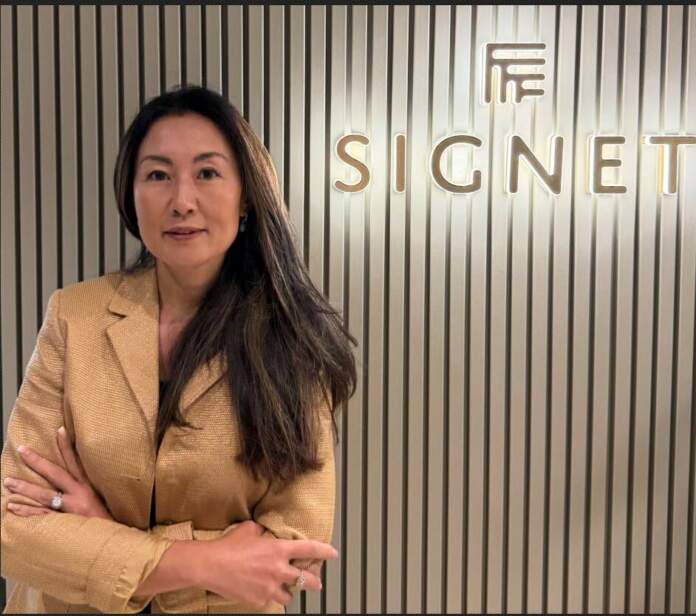
By Yelena Martino, Group CEO
Signet Capital Management Group
It usually begins not with a call about investment returns or market conditions. It begins with a call about a problem. A patriarch is ill. A business sale has completed and the family suddenly holds more liquidity than it has ever managed before. Two siblings who ran a company together for thirty years now disagree – not about the business, which is sold – but about everything that comes after. Or a family office in Limassol is trying to untangle a portfolio built by a father over four decades, and no one left alive can explain why it looks the way it does.
In every one of these conversations, there is a common thread. The family had wealth. The family had advisers. The family sometimes had structures – trusts, holding companies, foundations. What the family almost never had was a single written document that said, clearly and in terms everyone had agreed to: “ this is what our money is for, this is how we manage it, and this is what happens when we cannot all be in the room together”.
That document is an Investment Policy Statement. And in Cyprus – where business wealth is often concentrated, family structures are close-knit, succession is rarely discussed openly, and the intersection of local, European, and international regulation creates genuine complexity – the absence of one is not a minor gap. It is a structural vulnerability.
Cyprus is not a simple wealth environment
Let us be honest about the context in which Cypriot families manage their wealth. This is not straightforward.
The typical profile of a successful Cypriot businessperson or family includes assets and interests that span multiple jurisdictions – Cypriot real estate, a UK or European holding structure, perhaps a Cyprus Investment Programme legacy position, business interests in the Gulf or Eastern Europe, and a personal portfolio held through a private bank in Switzerland, Luxembourg, or London. Add to this a family that may include members resident in different countries, with different tax residencies and different risk appetites, and the picture that emerges is not one that can be managed by instinct, by one trusted adviser, or by an informal understanding between family members.
Cyprus also occupies a distinctive position as a financial centre. CySEC-regulated entities, the treaty network, the professional services infrastructure – these are genuine advantages. But they also mean that families here are operating in an environment where the quality of advice, the structure of mandates, and the governance of portfolios can vary enormously. The absence of a written policy framework is particularly dangerous when the adviser landscape is competitive, when mandates are loosely defined, and when families are managing simultaneously across jurisdictions with different regulatory expectations.
What an Investment Policy Statement actually is
The term can make it sound like a technical document written for institutional investors. It is not. Or rather – it should not be. A well-drafted IPS for a family is a governing document. Think of it as a constitution for your capital. It does not tell you which fund to buy or when to rebalance. It tells you *why* you invest, *what* you are trying to protect or build, *who* is authorised to make decisions, and *what you will never do*, regardless of how persuasive the presentation.
In practice, a family IPS addresses six core areas:
Purpose.
What is this wealth for? Preservation across generations? Income for the current generation? Funding a specific goal – a foundation, a business re-entry, education across the family? The answer matters more than most families realise, because it shapes every other decision.
Risk tolerance.
Not the number on a questionnaire. The real, articulated capacity of the family, as a unit, to absorb loss. How much of a drawdown would cause someone to make a bad decision? What would a thirty-percent decline in the portfolio mean for the family’s obligations, its relationships, its sense of security? These questions need answers before a crisis, not during one.
Liquidity requirements.
How much capital must remain accessible, at what notice, and for what purposes? This is where most families fail. Illiquidity compounds – private equity commitments, real estate funds, structured products – and when a care need arises, or a business opportunity demands capital, or a family emergency strikes, the portfolio that looked well-diversified reveals itself as a collection of locks with no keys.
Allocation framework.
Not rigid targets, but ranges. Upper and lower bounds for each asset class, currency, geography, or instrument type. Rebalancing triggers. Concentration limits. A cap on illiquid exposure as a percentage of total capital. These are the guardrails that prevent drift from becoming ruin.
Restrictions and screens.
Ethical constraints. Jurisdictional limits — relevant for Cypriot families with Russian, Middle Eastern, or Eastern European business connections in the current regulatory environment. Counterparty exclusions. Legacy positions that are held for family or sentimental reasons and should not be managed on pure return grounds.
Governance.
Who is authorised to make investment decisions, and above what threshold? How are disputes between family members resolved? How often is the IPS reviewed, and by whom? What is the process for changing the mandate of an external adviser? This section is the most important and the most commonly omitted.
Five situations where the absence of an IPS causes real damage
These are not hypothetical. They are patterns I have observed directly, in Cyprus and across the jurisdictions where our clients operate.
When the decision-maker can no longer decide.
When the next generation steps in.
When a persuasive adviser appears
When family members disagree
When markets fall sharply.
A note on the Cypriot context specifically
Families in Cyprus face a set of challenges that make this more pressing than in some other jurisdictions.
The concentration of business wealth in a relatively small community means that reputation matters enormously, and that conflicts – when they arise – tend to become visible quickly. Governance failures within a family are rarely contained.
The use of Cyprus holding structures and trusts – often for legitimate tax and estate planning purposes – creates a complexity that requires documented intent. When a family holding company sits above a portfolio of assets, the question of who governs the company, and on what mandate, is not merely a legal question. It is a wealth management question, and it requires a written answer.
The CySEC-regulated environment imposes certain suitability and governance obligations on licensed advisers, but it does not and cannot substitute for a family’s own investment governance framework. Regulation protects against misconduct by advisers. It does not protect against drift, against family conflict, or against the consequences of decisions made without a policy framework.
Finally, the generational transition currently underway in many Cypriot business families – from the generation that built businesses in the 1980s and 1990s to the generation that is now inheriting or co-managing the resulting wealth – is precisely the transition at which governance frameworks matter most and are most commonly absent.
The best time to write your family’s Investment Policy Statement was ten years ago. The second-best time is now – before the circumstances that will make you wish you had done it arrive unannounced.
*Signet Capital Management Group is a multi-jurisdictional wealth and investment management firm with regulated entities across Switzerland (FINMA), Cyprus (CySEC), the UAE/Abu Dhabi (ADGM/FSRA), and the United Kingdom (FCA). Our Cyprus hub serves private clients, family offices, and institutional investors across the region.*
*This article is intended for informational purposes and does not constitute investment, legal, or tax advice. Families should seek qualified professional guidance tailored to their specific circumstances and jurisdictions.*


